DiscoverPalawan.
Palawan
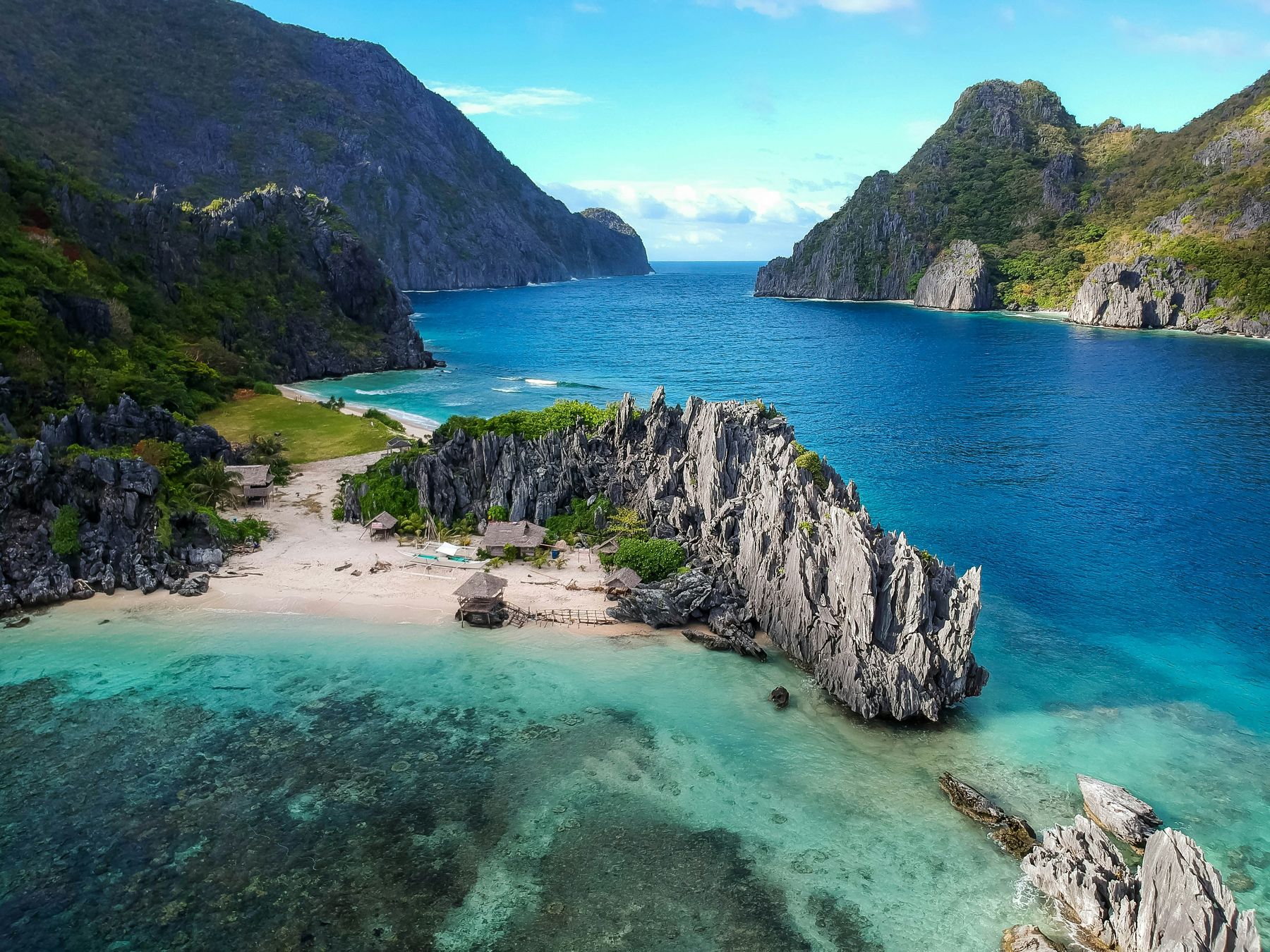
El Nido's Lagoons, Limestone & Coral Seas of the Philippines' Last Frontier
El Nido's island tours and hidden lagoons, Coron's lakes and Japanese wrecks, Puerto Princesa and the underground river, Port Barton and San Vicente: the complete guide to Palawan.
$9.99ebook · 2027 edition
Free travel guide
How to travel to Palawan.
Palawan is a long, thin island province between the Sulu Sea and the South China Sea, often called the Philippines' last frontier. Limestone cliffs rise out of clear water, lagoons hide behind them and small islands are scattered all around. This is how to travel it.
The province
Where is Palawan?
Palawan stretches about 450 km from Mindoro in the north towards Borneo in the south. Puerto Princesa, the capital, sits in the middle. El Nido is at the northern tip of the main island, and Coron is on Busuanga, further north in the Calamian Islands.
Most first-time visitors combine El Nido and Coron, linked by boat, with a stop in Puerto Princesa or Port Barton on the way.
Getting there
How to get to Palawan.
Puerto Princesa (PPS) has the most flights, from Manila, Cebu and other cities. El Nido has its own small airport, and Coron is served by Busuanga airport (USU).
Vans run between Puerto Princesa and El Nido in about five to six hours. Ferries and fast boats link El Nido and Coron, weather permitting.
- Boat crossings are cancelled in rough weather: keep your plans flexible.
- Environmental and tour fees apply in El Nido and Coron: carry cash.
Around the islands
Getting around.
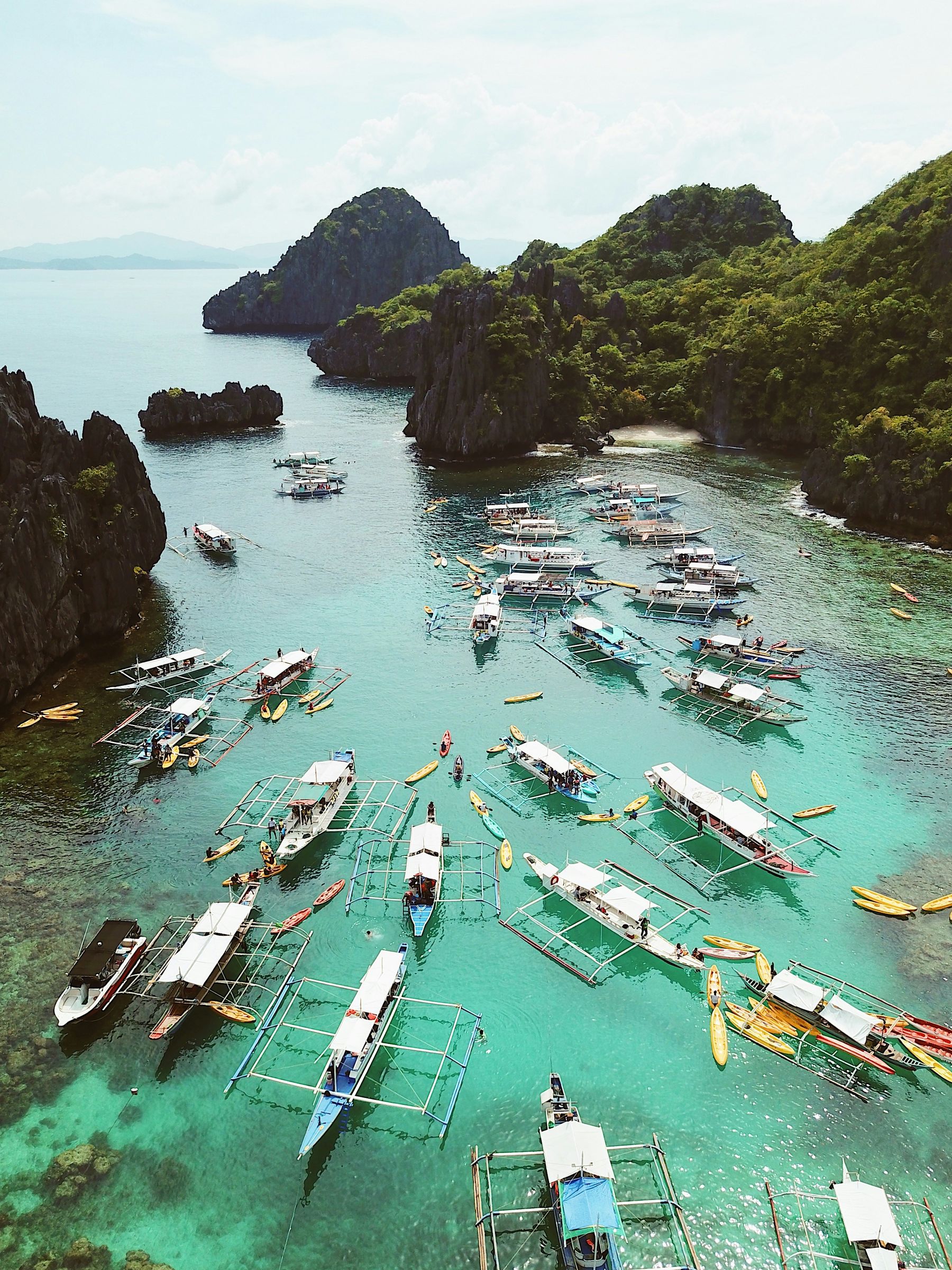
Tricycles cover short distances in town. Island tours are by banca, booked through your accommodation or a registered tour office.
Experienced riders can rent a scooter for the beaches outside El Nido town, such as Nacpan. Always wear a helmet and avoid riding at night.
El Nido
Island tours and the lagoons.
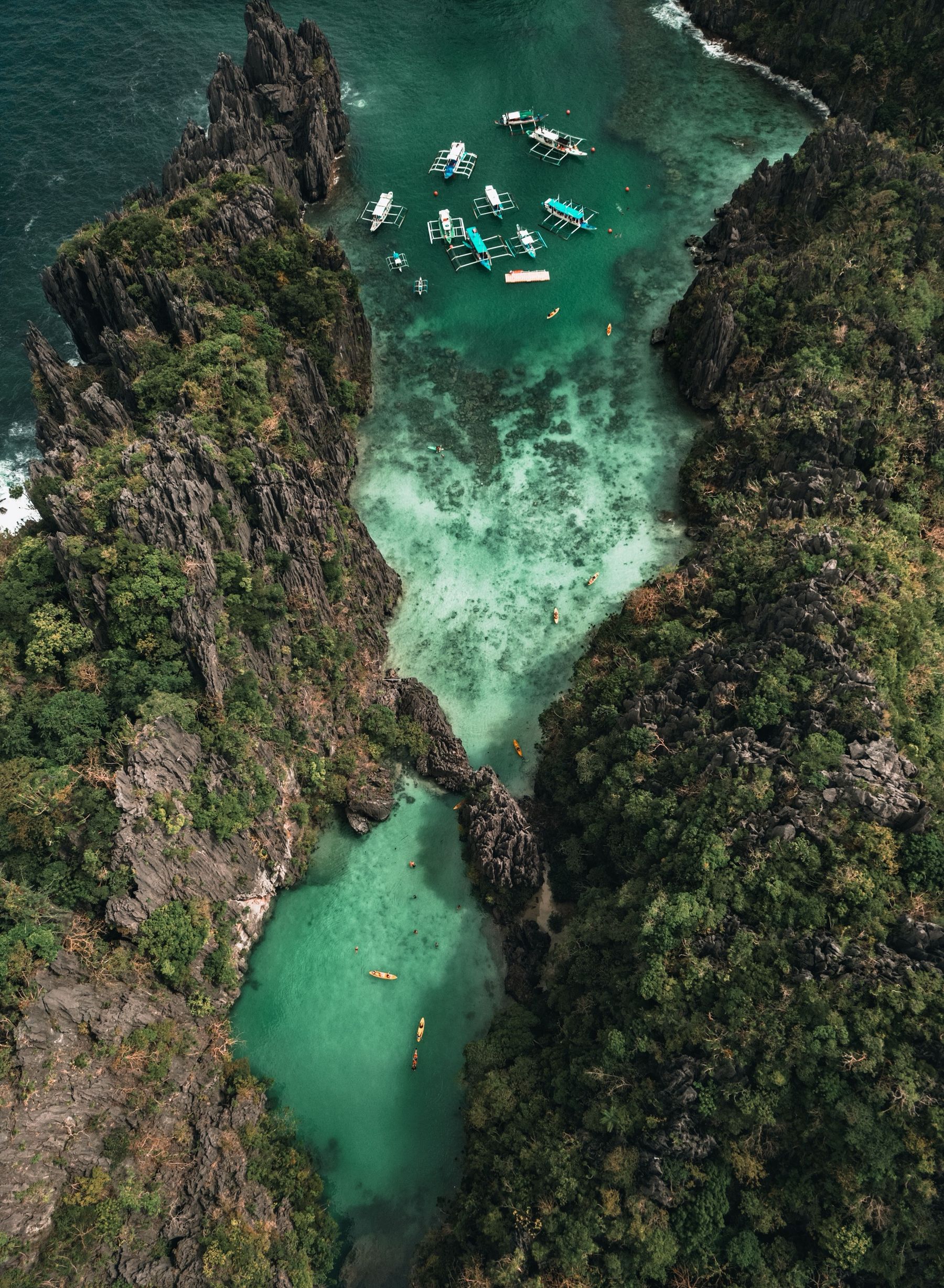
El Nido's boat trips are sold as Tours A, B, C and D, each with a set route of lagoons, beaches and snorkel spots in Bacuit Bay. The Big and Small Lagoons are the most famous, and kayaking into them is the highlight.
On land, Nacpan Beach is a long golden curve north of town, and Las Cabañas is the sunset beach.
- Visitor numbers at some lagoons are limited: book a day ahead in high season.
- Use reef-safe sunscreen and never stand on coral.

Coron
Lakes, lagoons and wrecks.
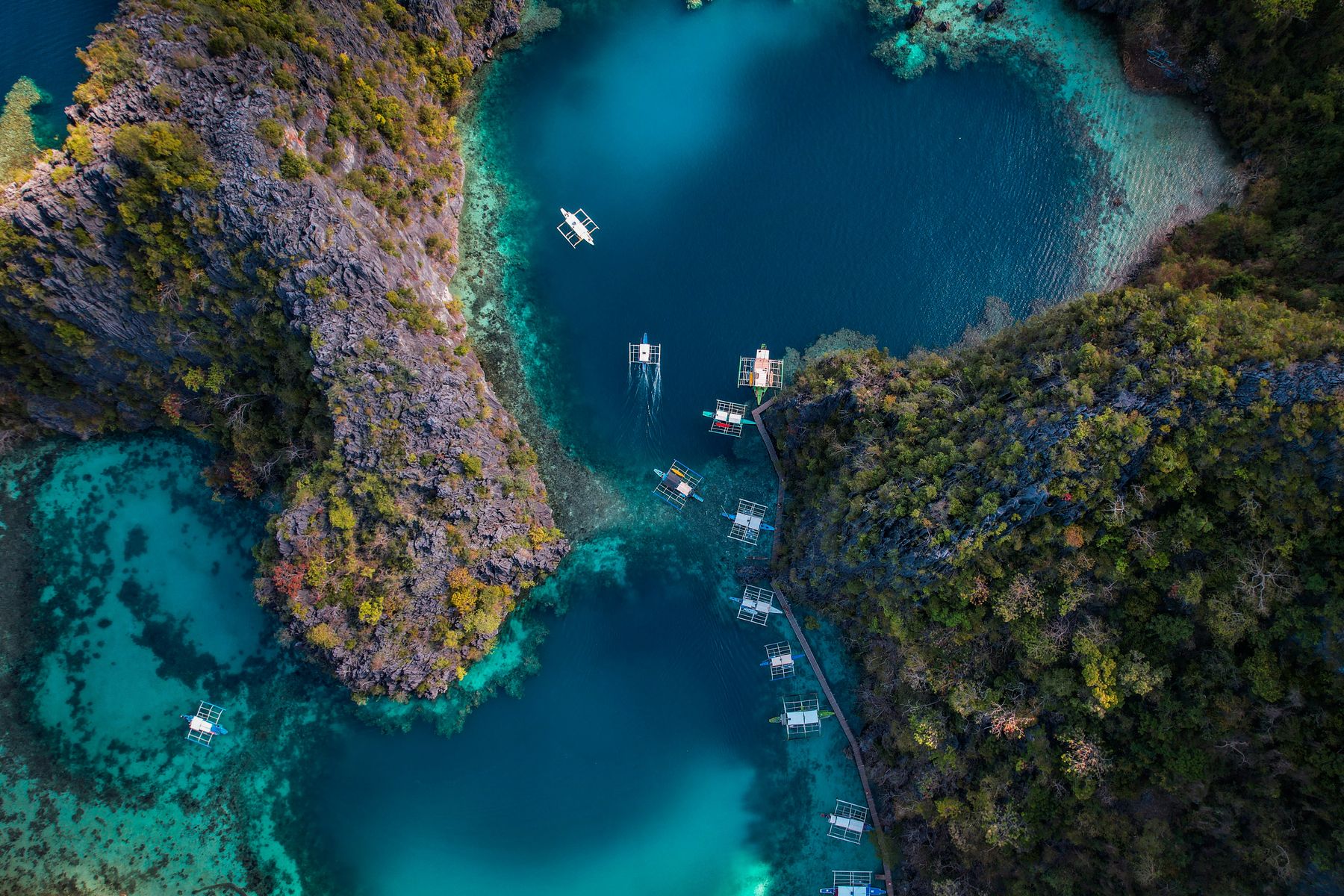
Kayangan Lake is the postcard view of Coron: a short climb gives the famous look-out over limestone and lagoon. Twin Lagoon and Barracuda Lake are a swim away.
Beneath the bays lie Japanese shipwrecks from 1944, some shallow enough for snorkelling, others among the best wreck dives in Asia.
Timing
When to go.
The drier months run from about November to May, and March to May are the calmest and hottest. June to October brings the south-west monsoon, more rain and rougher crossings.
Typhoons are possible in the second half of the year: check the forecast before you book boats.
Eat and stay
Food and where to stay.
Seafood is the star: grilled fish, squid and kinilaw. In Puerto Princesa try tamilok, the woodworm from the mangroves, if you are brave.
Stay in El Nido town for convenience, Corong-Corong for sunsets, or on an island resort for quiet. In Coron, the town is the base for tours, with resorts on the outlying islands.
DiscoverPalawan.
Good to know
Questions before you go.
Should I visit El Nido or Coron?
Both if you can: El Nido for lagoons and beaches, Coron for its lakes and wreck diving. They are linked by boat.
How do I get to El Nido?
Fly direct to El Nido, or fly to Puerto Princesa and take a van north, about five to six hours.
When is the best time to visit Palawan?
November to May is drier, with the calmest seas from March to May.
How many days do I need in Palawan?
A week covers El Nido and Coron. Ten days or more lets you add Port Barton or Puerto Princesa.
More from Discover Philippines